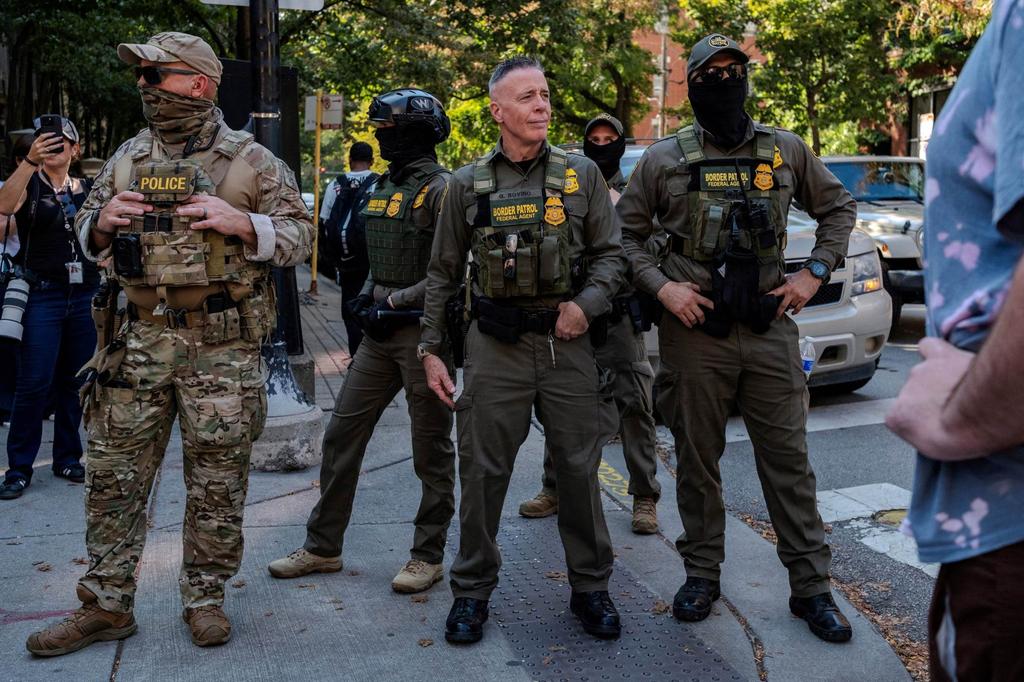
The United States is now facing the greatest threat to our free way of life in our history. Even the US Civil War was not the danger that is Donald Trump. In the Civil War, the South wanted to separate from the rest of the Union. Today, Trump does not want to separate from the US, he seeks to destroy the fundamental functions and purpose of the US. He seeks to destroy the Constitution, replacing the Judiciary and Legislative Branches with puppets of the Executive. Plainly stated, Trump seeks to establish himself as a dictator . . . and as of May 2025, he may succeed.
As the decisive political year 2026 begins, the source of our national angst is becoming clearer. It’s nothing less than the collapse of American capitalism. Our peculiar brand of extreme, unregulated, self-promotional, science- and engineering-free, over-the-top capitalism is collapsing of its own weight, not to mention its many contradictions. The discontents and depredations of President Donald Trump’s incipient despotisms are mere symptoms of that dread disease.
Before you click out, consider this. China, which will clearly own our new twenty-first century, is now, by far, the world’s foremost capitalist nation. It’s a robust example of state capitalism. There a vast array of private firms has free reign to produce things and make money, subject to strict regulation by the state in its interest. That simple subjection to government control makes all the difference.
China’s great industrial firms are beating ours, Europe’s and even some in Japan in productivity, price and more recently quality. They are nearly all privately owned and privately run and therefore “capitalistic” in every sense. In this respect, they resemble the robust private firms of the postwar US.
I heard that phrase briefly, far too briefly during the last election.
I suggest that should be the main platform for the Democratic Party for the midterms and beyond.
Thom Hartmann has pointed this out often and it was my experience too. My father had a middle class job. My mother didn’t work. Yet my father was able to buy & own a house. Every 4or 5 years he would buy a new car. His health care benefits from having a union job were excellent. NEVER had to worry about hospitals or any health care costs.. A two week vacation every year. I realize that I was fortunate, but this was the experience for a hell of a lot of people in the middle class. Now that middle class is shrinking at an alarming rate. Two people working full time cannot afford what on person used to be able to afford.
A huge percentage of our population has never experienced this and has no knowledge that this actually existed in our country.
This all began to disappear with the election of Reagan and the Supreme Court allowing more and more money into election. Billionaires didn’t always control our government.
IT DOES NOT HAVE TO BE THIS WAY should be # 1 on the Democratic platform. We can and should not ever go back, but we should move forward with the best of what we had helping to guide us.
President Trump announced Wednesday that he is pulling National Guard troops out of Chicago, Los Angeles and Portland, Oregon, for now.
District judges and appeals courts have issued various rulings about the legality of the deployments. Last week, the U.S. Supreme Court refused to block a lower court’s decision barring Trump’s use of the National Guard in Chicago.
“We are removing the National Guard from Chicago, Los Angeles, and Portland, despite the fact that CRIME has been greatly reduced by having these great Patriots in those cities, and ONLY by that fact,”Trump wrote in a TruthSocial post. “Portland, Los Angeles, and Chicago were GONE if it weren’t for the Federal Government stepping in. We will come back, perhaps in a much different and stronger form, when crime begins to soar again – Only a question of time!”
Trump went on to call the Democratic leaders of the cities and states where he deployed troops “greatly incompetent.”
This is what happens when we oppose Trump and stand up to him: He loses and runs away.
Opposing Trump and resisting him always works. Bargaining with him never works.
President Donald Trump has spent nearly a quarter of his second term at a golf club, according to a tracking website. The 79-year-old has visited golf clubs at least 79 times since taking office on January 20, 2025, or about 22.8 percent of the presidency, according to DidTrumpGolfToday.com.
The tracker, which compiles data based on Trump’s public schedule, does not include data from December 2025.
Since returning to office, Trump’s golf club visits have cost taxpayers an estimated $110,600,000,according to the website.
The tracker based that calculation on a 2019 Government Accountability Office report on the cost of four golf trips during Trump’s first presidency. Trump’s busiest month at the golf club was August, when he spent every weekend at his golf clubs, totaling 10 days. The president also spent nine days at the golf club in both March and November, according to the tracker.
I recall back in the heyday of the Tea Parties in Virginia “Agenda 2021” was one of their big things. While most local Tea Parties disappeared from Virginia after Obama’s last term, their remnants picked up the “COVID vaccine will kill you” chant and added it to “Agenda 2021,” “chemtrails,” and other rightwing fever dreams. WTF is wrong with these people?
President Donald Trump said Wednesday that he expects construction of the “Triumphal Arch” he wants to build in Washington, D.C. to begin “sometime in the next two months.”
The arch is one of several building projects Trump has pushed for as the country enters into its 250th year, proposed to be constructed at the culmination of a bridge that leads from the Lincoln Memorial to Arlington National Cemetery. The design of models Trump has shown reporters echoes that of the Arc de Triomphe in Paris, France and would be designed to honor America’s military veterans.
The president’s other efforts to remake Washington, D.C. have been divisive, from the demolition of the White House’s East Wing for a ballroom to the addition of his name to the Kennedy Center, cheered by his supporters and drawing condemnation — and lawsuits — from critics.
One day Trump’s attempt to establish a dictatorship in the US — supported by about 40 percent of the population – will be over and the rest of us will have to restore our democratic republic.
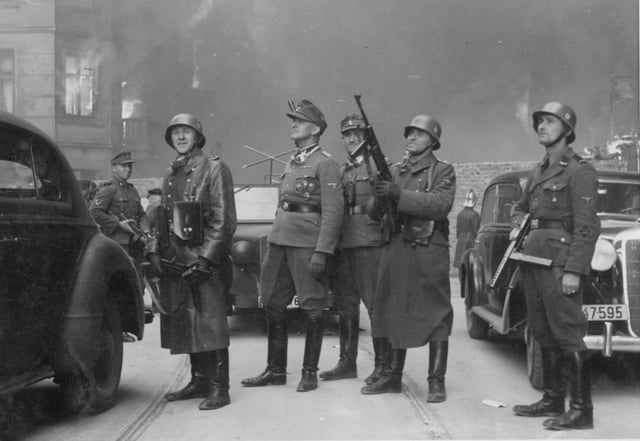
The question then will be how to deal with Trump’s followers. The example of Nazi Germany after WW II may be instructive.
“Historians have a word for Germans who joined the Nazi party, not because they hated Jews, but out of a hope for restored patriotism, or a sense of economic anxiety, or a hope to preserve their religious values, or dislike of their opponents, or raw political opportunism, or convenience, or ignorance, or greed.
That word is “Nazi.” Nobody cares about their motives anymore.
They joined what they joined. They lent their support and their moral approval. And, in so doing, they bound themselves to everything that came after. Who cares any more what particular knot they used in the binding?”
― A.R. Moxon
When Trump and his dictatorship are gone, and we are faced with dealing with his supporters, remember this:
Now that Trump is one year into his second term, it is clear that Trump is not the problem. The problem — the threat to our democracy — has been 50 years in the making and that threat is the Republican Party.
I have added a new section to my Clear and Present Danger blog: THE PEOPLE WHO ARE KILLING OUR DEMOCRACY.
This new section will feature articles, background, and facts about the individuals who are the real threat to our democracy.
The first person I will focus on is Chief Justice John Roberts whose life’s work has been to destroy the Voting Rights Act of 1965 and the firmly establish the rule of wealthy white people.
In 2013, when Chief Justice John Roberts Jr. issued the most far-reaching Supreme Court decision on voting rights in the 21st century, he finally succeeded in gutting a civil rights law he has been fighting his entire career. For three decades, Roberts has argued that the United States has become colorblind to the point where aggressive federal intervention on behalf of voters of color is no longer necessary—and this case, Shelby County v. Holder, was the pinnacle of that crusade.
Roberts honed his views on race and voting as a clerk for Justice William Rehnquist, a man who as a court clerk himself had written a memo endorsing Plessy v. Ferguson, the “separate but equal” doctrine upholding segregated schools. On the high court, Rehnquist helped redefine opposition to civil rights laws as a commitment to color blindness, and he used this theory to undermine the 1965 Voting Rights Act.
Roberts took a similar outlook in the Reagan Justice Department, where he worked after finishing his Rehnquist clerkship. Gerry Hebert, now executive director of the Campaign Legal Center, was also at the DOJ. He recalls that Roberts “had it in for the Voting Rights Act,” which Roberts thought should cover only intentional discrimination, not discriminatory results or effects of state voting regulations. But proving intentional discrimination is virtually impossible—and besides, Hebert says, judges “don’t want to find that somebody was a racist.” They’d rather focus on the discriminatory impact of a law. “I don’t think John Roberts ever got that.”
My new blog section will be a work in progress; I’ll add to it as time goes on. Bookmark it and come back often.
The House Judiciary Committee on New Year’s Eve released a transcript and video of its closed-door hearing with Jack Smith, the former special counsel who led the two failed prosecutions of President Donald Trump.
The deposition conducted earlier this month lasted more than eight hours, during which Smith was grilled by lawmakers over the twin criminal investigations into Trump – one probing the mishandling and retention of classified documents and a second inquiry into his role in attempting to overturn the 2020 election.
“The decision to bring charges against President Trump was mine, but the basis for nine of those charges rests entirely with President Trump and his actions, as alleged in the 10 indictments returned by grand juries in two different districts,” Smith told the committee.
Republican lawmakers have lambasted the investigations as alleged “weaponization” of the justice system against the president and his allies, particularly criticizing Smith for subpoenaing the phone records of lawmakers who spoke with Trump about the election scheme.
This video is 8 hours long; Jack Smith’s testimony.
Here is a link to the transcript of Smith’s 8-hour testimony.
Giving testimony was a significant risk for Smith as Trump has called for him to be prosecuted.
Here are the highlights of Smith’s testimony:
Toll records were ‘very important’
The GOP-led committee grilled Smith on his office’s move to obtain toll records from members of Congress, meaning phone records showing whom lawmakers had called and the time of the calls. Toll records do not provide the content of phone calls.
Smith said that evidence was “very important” for showing Trump’s alleged criminal intent in the election subversion case.
“Having a record that is a hard record about a time, and the timeline of that afternoon was particularly important because the violence had started. The president refused to stop it,” Smith said.
“He endangered the life of his vice president, and then he’s getting calls, and not just – not calls from Democrats, not calls from people he doesn’t know – calls from people he trusts, calls from people he relies on – and still refuses to come to the aid of the people at the Capitol,” he added.
Asked about calls from lawmakers for “accountability” because their phone records were obtained, Smith said Trump was ultimately responsible for their records being subpoenaed.
“These records are people, in the case of the senators, Donald Trump directed his co-conspirators to call these people to further delay the proceedings. He chose to do that.”
‘Grave risk of obstruction of justice’
Smith also faced sharp questions about whether his pursuit of lawmakers’ toll records violated the Constitution’s Speech or Debate Clause, which shields legislators from certain law enforcement actions related to their legislative duties.
Smith said his team consulted with Justice Department experts and that he was not aware of court precedents that would have prohibited those subpoenas. He also defended the move by his office to obtain orders from court that prevented phone companies from disclosing to the lawmakers that their records had been turned over to investigators.
“There was a grave risk of obstruction of justice, given the obstructive conduct of President Trump as is set forth, for example, in the indictment in Florida,” Smith said, referring to the classified documents case.
Smith also said he did not regret his decision to repeatedly seek gag orders against Trump, as he attempted to limit the president’s public statements that he argued would influence the cases and endanger people involved, including FBI agents.
The prosecutors’ requests for non-disclosure orders did not tell the judges that the records being sought were for lawmakers’ phones, which was in line with DOJ policy at the time, Smith said.
Since then, the department has changed its guidance, according to Smith’s testimony, and prosecutors must inform courts if the non-disclosure orders pertain to the phone records of members of Congress.
Smith defends against political bias claims
Smith testified that he never spoke to Joe Biden about the investigations, nor did he ever receive instructions from the former president about his work.
He also repeatedly said that he would have approached the cases the same if he had been asked to investigate a Democratic president – such as Biden or Barack Obama.
Asked if he lobbied or petitioned for the special counsel position, Smith said he did not and accepted the role only because he believed “I thought I was the right person for the job. I knew that this would be a challenging job.”
Weighing charges against co-conspirators
Smith testified that he was still weighing whether to bring charges against Trump’s alleged co-conspirators in the election subversion case when Trump’s reelection forced his investigation to come to an end.
But Smith said that he would have “welcomed” those alleged co-conspirators, such as Trump attorney John Eastman, to the stand if the case had gone to trial and if Trump’s defense team sought to call them.
Among the Trump associates who sat for interviews with Smith’s team were Boris Epshteyn and attorney Rudy Giuliani, Smith testified.
Asked why he did not follow a common prosecutorial approach of charging lower level accomplices before pursuing the higher levels of a conspiracy, Smith said that he did not need to follow that path to secure witnesses against Trump.
“This was not a case where we needed more witnesses,” Smith testified. “It was a case where we needed to be able to present the case in a streamlined way because there was so much evidence.
Unreleased section of report on Mar-a-Lago documents
Smith was careful to avoid divulging any information that was not already public about Trump’s handling of classified documents in Mar-a-Lago, repeatedly stating that he was barred by a court order from testifying about the contents of the second volume of his report.
Before shutting its doors, Smith’s team compiled a 137-page final report on the probe before Trump was sworn into office for a second term. But the judge who presided over the classified documents case, Aileen Cannon, has prohibited releasing the section on the classified documents case.
The Justice Department told Smith’s legal team that it believed Cannon’s order applied to Smith, his attorney said, which “significantly” limited what he could say publicly.
Giuliani said that he did not believe his own claims about voter fraud
Smith told the committee that Guiliani, who was one of the uncharged co-conspirators in the election interference case, did not believe his own claims he spread about voter fraud in the 2020 presidential election.
“In fact, when we interviewed him, he disavowed a number of the claims,” Smith said. “He claimed they were mistakes or hyperbole, even the claim about Ruby Freeman, where he, you know, basically destroyed this poor woman’s life by claiming she was a vote scammer.”
Giuliani last year reached an agreement with two Georgia election workers – Freeman and Shaye Moss – that he defamed to settle the nearly $150 million judgment against him, in a deal that allowed him to keep his home and most valuable possessions.
Smith got emotional discussing fired FBI agents and prosecutors
Smith was emotional when he discussed prosecutors or FBI agents who have been fired by the Justice Department for their work on cases related to the January 6, 2021, US Capitol riot.
“I think what has happened to career prosecutors and career FBI agents is awful. It’s contrary to the rule of law,” Smith said. “It’s contrary to who I think we are as a country.”
Smith apologized for getting emotional when discussing one agent in particular who worked on his case. He was “fired for doing his job,” two weeks after the passing of his wife.
“These are not partisans,” Smith added. “They’re people who have decided they don’t want to make a lot of money. They’re not looking for fame. They just want to do good work, and I think when you lose that culture, you lose a lot.”
Seeking a public hearing
Smith also stressed that he was still willing to testify in a public setting – a request that was denied by the committee chairman in favor of the closed-door meeting. He told lawmakers that he was willing to appear voluntarily to defend his team’s work, arguing that many of them had been “vilified” for their work.
“They’re not people who like to go in front of cameras and defend themselves,” Smith said. “There have been mischaracterizations about my work.”
Asked if he was still willing to appear voluntarily for a public hearing, Smith replied: “Yes.”